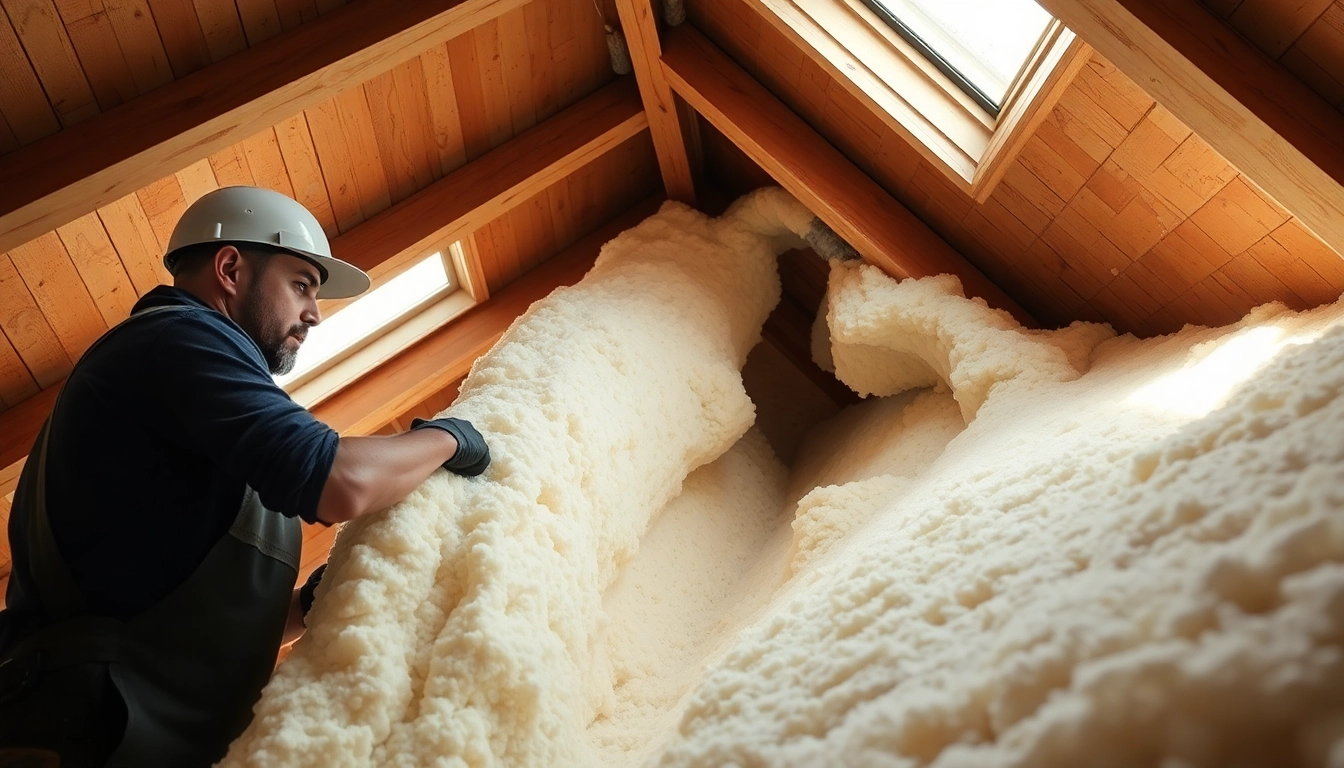
Understanding Spray Foam Insulation
What is Spray Foam Insulation?
Spray foam insulation is a type of insulation material created from a mixture of chemicals that expand when sprayed, transforming into a solid foam within minutes. It is primarily used in residential and commercial properties to fill gaps, cracks, and cavities, providing superior thermal resistance compared to traditional insulation methods. Unlike batts or rolls, spray foam adherence to surfaces results in an airtight seal, effectively preventing air infiltration and enhancing energy efficiency.
Benefits of Using Spray Foam Insulation
The advantages of spray foam insulation are numerous and often compelling for homeowners looking to improve their buildings’ energy efficiency and comfort:
- Energy Efficiency: Due to its airtight seal, spray foam minimizes heat loss during winter and keeps spaces cooler during summer, reducing energy consumption and costs.
- Moisture Barrier: It helps prevent moisture buildup, which can lead to mold and mildew, making buildings healthier spaces to live and work in.
- Soundproofing Qualities: The density of the foam improves sound absorption, making it beneficial for noise-sensitive environments.
- Longevity: Spray foam is durable and can last for decades without needing to be replaced, making it a cost-effective solution in the long run.
- Reduced Air Leakage: A significant percentage of heat loss occurs through air leaks. Spray foam’s expansive nature fills cracks, effectively reducing air leakage.
Problems Associated with Spray Foam Insulation
While spray foam insulation has several benefits, it can also pose issues that homeowners need to consider:
- Health Risks: The chemicals used in spray foam can emit volatile organic compounds (VOCs) during application, which may lead to respiratory issues if proper ventilation is not ensured.
- Installation Challenges: Proper installation is critical. If done incorrectly, it can lead to gaps, compromising the insulation’s effectiveness.
- Costly Removal: If problems arise, removing spray foam insulation can become a complex and costly process.
- Potential for Overinsulation: In certain climates, excessive insulation can lead to issues with ventilation and increased humidity indoors.
Reasons to Remove Spray Foam Insulation
Health Concerns Linked to Spray Foam
Health concerns are one of the primary reasons homeowners opt to remove spray foam insulation. Prolonged exposure to the chemicals used in spray foam can lead to respiratory issues, headaches, and other health problems. If you notice persistent odors or experience health complications, it’s essential to assess the condition and, if necessary, consult a professional about removal.
Structural Issues Related to Improper Installation
Incorrect installation can also lead to significant structural problems. Gaps or improper application can result in insufficient insulation, leading to inefficiencies that increase energy costs. Furthermore, moisture trapped within the structure can cause wood rot and other damages. In these cases, removal of the spray foam is essential to rectify the insulation issue and safeguard your property.
When to Consider Removal
Determining when to remove spray foam insulation depends on various factors:
- Unpleasant odors or off-gassing seen manifesting over time.
- Visible mold growth around the foam.
- Health symptoms experienced by occupants.
- Noticeable structural damage or degradation indicating insulation failure.
Tools and Equipment Needed
Essential Safety Gear
When planning to remove spray foam insulation, personal safety is paramount. Equip yourself with the following safety gear:
- Respirator Mask: Protects against inhalation of harmful fumes and particles.
- Safety Glasses: Shields your eyes from debris and irritants.
- Gloves: Prevents skin irritation and chemical exposure.
- Coveralls: Provides a layer of protection against foam particles and hazardous materials.
Recommended Tools for Removal
Having the right tools at your disposal is crucial to effectively remove spray foam insulation without causing damage to the underlying structure:
- Utility Knife: Essential for cutting through foam efficiently.
- Reciprocating Saw: Useful for larger sections of foam that need removal.
- Scrapers: Ideal for removing residual foam from surfaces.
- Vacuum: A shop vacuum can help clean up debris and dust post-removal.
Disposal Options for Removed Insulation
Disposing of removed spray foam insulation must be done carefully. It can often be disposed of as construction waste, but local regulations may vary. Here are some general guidelines:
- Contact your local waste management service to understand disposal options.
- Consider recycling programs that may accept specific types of foam.
- Avoid incineration, as it may release harmful substances.
Step-by-Step Guide to Remove Spray Foam Insulation
Preparation Before Starting
Preparation is key to successful removal. Here is a checklist to ensure you are ready:
- Ensure the area is well-ventilated by opening windows and using fans.
- Gather all necessary safety gear and tools before beginning work.
- Clear the area of furniture and personal belongings that may be in the way.
- Consult with professionals if unsure about the removal process.
Safe Removal Techniques
Once you’re prepared, follow these steps for safe removal:
- Start by using a utility knife to cut through the foam at the edges. Try to make clean cuts that will minimize damage to the underlying structure.
- For larger areas, use a reciprocating saw for quicker removal. Always cut carefully to avoid hitting electrical wiring or plumbing.
- After cutting, use scrapers to peel away foam chunks, ensuring any adhesive residue is removed.
- Utilize a vacuum to clean up debris continuously, keeping the workspace safe and organized.
Cleaning Up After Removal
The cleanup process is crucial after removing spray foam insulation. Follow these steps:
- Thoroughly vacuum the area to eliminate any foam particles or dust.
- Inspect the surface for any leftover adhesive and remove it carefully.
- If necessary, allow the area to dry completely before performing any repairs or reinsulation.
- Dispose of the removed foam according to local regulations and guidelines.
Frequently Asked Questions
How long does it take to remove spray foam insulation?
The removal process varies but typically takes a few hours to a day, depending on the area covered.
Can I remove spray foam insulation myself?
While DIY is possible, hiring a professional is recommended for safety and efficiency. Incorrect removal might damage your property.
Is it safe to stay in the house during removal?
It is advised to vacate during removal due to dust and potential fumes released. Ensuring safety is vital.
What are the costs associated with removal?
Costs vary widely based on the size of the area and disposal needs, typically ranging from hundreds to thousands. Getting quotes can help clarify the expenses.
Will I need to reinsulate after removal?
Yes, reinsulation may be necessary to maintain energy efficiency and ensure the structure’s integrity post-removal.